
Puff Pastry Palms
Here comes the recipe in honor of my friends Estefanía and Pablo, who delighted us with it one night at their home—and I’ve been hooked ever since: the famous palmeritas. Until then, I had always eaten the store-bought ones—the dreaded “industrial pastries”—but since that day I haven’t bought them again. Now I make them myself and enjoy them (not entirely by myself, of course ;)), and you can really taste the difference!
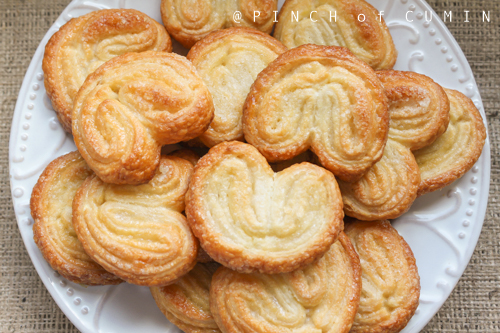
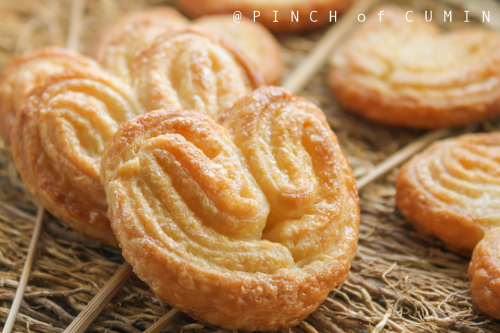
It’s true that the shape isn’t as perfect as the industrial ones, nor do they all come out exactly the same (especially the ones on the edges, which turn into a sort of “pseudo-palmerita strip”), but their texture and flavor more than make up for it.
As a dessert, for breakfast, at coffee time, or simply to fill your home with a delicious aroma. They’re delicious, as well as cheap and very easy to make.
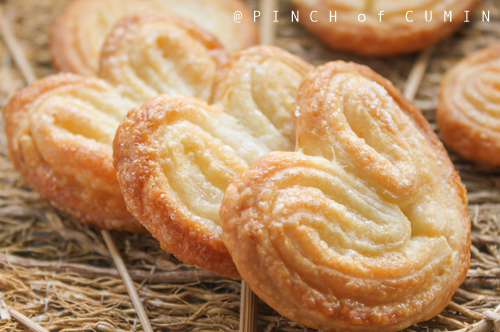
Ingredients for about 20 units
1 sheet of puff pastry for sweet recipes
white sugar
vanilla sugar
brown sugar (optional)
Preparation
Unroll the puff pastry onto the baking tray, using the same paper it comes with as a base; this will make it easier to transfer it into the oven later. The paper may become a bit “crispy,” like burnt, but it won’t catch fire.
Preheat the oven to 210ºC. Gently stretch the dough without tearing it. Using a spoon, spread a generous layer of sugar over the entire surface so that it’s fairly even. You can use a rolling pin, or even a clean wine bottle, to help the sugar stick well to the dough.
Now, take one end of the dough and fold it inward so that the edge meets an imaginary line in the center of the dough. Folding inward ensures the sugar stays inside. Repeat the same process with the other end.
Add another layer of sugar over the newly folded surface, just as before. At this point, I like to start using vanilla sugar, which adds a lovely final aroma and flavor. Again, fold both ends toward the center (once each). In the end, you’ll have a sort of “log” about 2–3 fingers wide. Make the final fold—one side over the other—and spread sugar again over the finished log.
Now, using a knife—preferably smooth but sharp enough for clean cuts—slice the entire log into pieces about 1 cm or a finger wide, depending on how thick you want the palmeritas. Place them on the baking paper on the tray, leaving some space between them so they don’t stick together as they expand in the oven.
Put the tray in the oven and lower the temperature to 200ºC. About 5–6 minutes is usually enough. I keep an eye on the color of the palmeritas and take them out when they’re ready, though it depends a bit on their thickness.
Notes
If they start to turn an orange-brown color on the edges, it’s time to take them out of the oven. Don’t leave them even a minute longer—they burn very easily.